The 1831 Southampton Insurrection was a tremendous explosion near the end of more than 200 years of slavery in English-speaking North America. In so many ways, this event can be considered the opening salvoes of the Civil War. This insurrection is perhaps the most famous event of its kind in the United States, sending shockwaves throughout the world. Nat Turner’s Rebellion occurred at a crossroads in American history as the young republic struggled to discover the truth behind the concepts of freedom and the immortal words written by the enslaver, Thomas Jefferson, that “All men are created equal.”
Few historical events spark so many differences of opinion as does Virginia’s 1831 Southampton Insurrection. Nat Turner, a slave and literate self-proclaimed preacher, believed that signs from Heaven guided him to initiate the largest and bloodiest slave revolt in American history. The event, almost 200 years later, remains highly emotional. Many people, then and now, have divergent thoughts about the uprising. Some refer to Turner as a rebel and killer, while others view him as a revolutionary hero. Despite one’s point of view, Nat Turner’s revolt was a mighty explosion in the history of American slavery. The rebellion shocked the world and added quick-burning fuel to the long-simmering debate about slavery since the arrival of the first Africans in 1619 at Old Point Comfort, Virginia. While some tasted the fresh air of freedom, most eventually became chattel property, carrying on their shoulders the rise of Virginia’s economic prosperity. Nat Turner’s Rebellion was not the only slave revolt in American history, yet it gave rise to the public debate about slavery, which eventually ended in the Civil War.
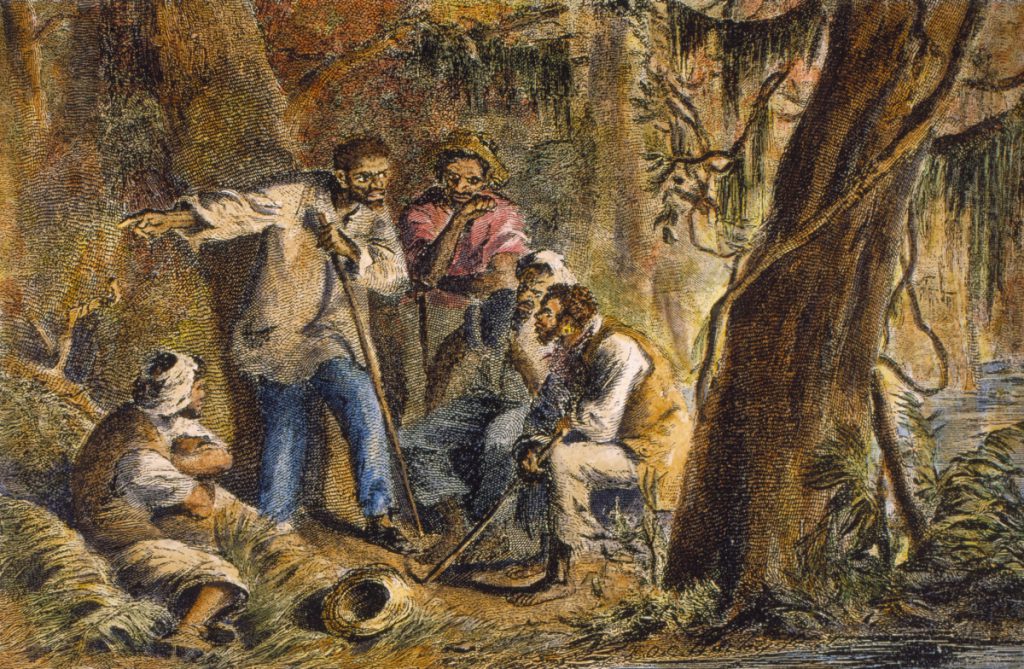
Early on Sunday evening, 21 August 1831, Nat Turner met with six of his followers in a reptile-infested swamp off Cabin Pond Road in Southampton County, Virginia. Turner, a literate religious mystic and preacher, believed that he had seen signs from God to release his fellow slaves from bondage. An eclipse of the sun in February was the sign he was waiting for to begin planning his uprising. Yet, he became ill when his revolt was supposed to be launched on 4 July 1831. Nevertheless, when a strange atmospheric condition occurred on 13 August, Turner knew it was time to strike. Turner told his men after their dinner that they must begin their revolution, and they were to slay all the enslavers they encountered, without regard to age or sex. Even though they had no arms or ammunition, Turner said that they would find them in the houses of their oppressors. He noted that many new followers would quickly join them as they marched through Southampton toward the county seat, Jerusalem, striking hard for liberty.

They struck first at the Benjamin Travis House. Travis’s young stepson, Putnam Moore, was Nat’s owner. All were killed in the house as they slept, including an infant. This act, during the early morning hours of 22 August, began the revolt. Turner and his men had already killed 52 enslavers by the time they reached the Vaughan House around noon on 22 August. The last deaths of landowners occurred there as Rebecca Vaughan, her two sons, niece, and overseer were killed. Turner’s command now numbered between 50 and 60 men, all mounted and armed with guns, axes, swords, and clubs. Nat Turner decided it was time to march on to Jerusalem, five miles away. He knew that the alarm had traveled about the insurrection, and he had to act quickly to expand his ‘army.’ Accordingly, he wished to secure arms, ammunition, and supplies in Jerusalem while spreading terror amongst the town’s white inhabitants.
As Turner’s men marched toward the county seat, they encountered local militia men at Parker’s Field and were checked there after a brief firefight. Then the insurrectionists strove to strike at Jerusalem by way of Cypress Bridge; yet, the militia was there in large numbers. Since he had lost (deserted, wounded, or intoxicated) many of his followers during the brief engagement at Parker’s Field, Turner decided to camp in Major Ridley’s slave quarters that evening and recruit more men. The next morning, the insurrectionists attacked Dr. Simon Blunt’s home. Dr. Blunt had prepared a defense and had even armed his slaves. Together they repulsed Turner’s attack. One of Turner’s most important lieutenants, Hark, was critically wounded. Turner had failed to re-group his command at Captain Newitt Harris’s house. The rebellion was then broken up by militia men. Virginia and North Carolina militia units, as well as troops from Fort Monroe, US Marines, and sailors from USS Natchez and USS Warren, had all rushed to Southampton County to put down the revolt. The militia soldiers were particularly vicious, killing approximately 40 slaves and free Blacks, many of whom had no connection whatsoever to the rebellion.
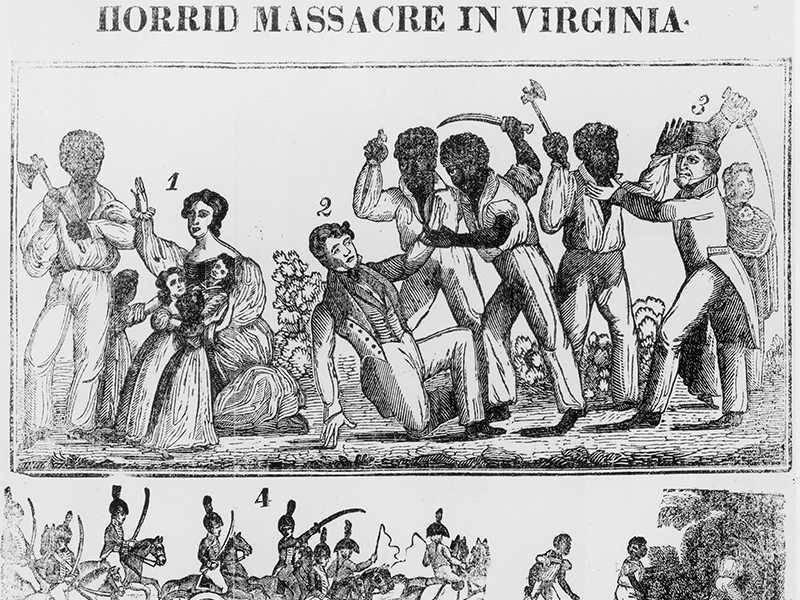
Many of Turner’s followers were captured and taken to Jerusalem for trial. Nat Turner himself was not captured until 30 October 1831. He was then taken to Jerusalem for justice. While in jail, he gave his confession to the lawyer, Thomas Ruffin Gray. Gray later published the story of the insurrection, known as The Confessions of Nat Turner. Turner was executed by hanging on 11 November 1831.
The 1831 Southampton Insurrection was the last major slave revolt prior to the Civil War. Governor John Floyd called the Virginia General Assembly into session in January 1832, during which the causes, events, and results of the rebellion were discussed. Several bills considered general manumission or the sale and deportation of all slaves were debated. None of these concepts was successful. Instead, new and extremely harsh slave codes were legislated. Nevertheless, the insurrection gave growth to the American Abolitionist Society, which was founded earlier in 1831. Great Britain outlawed slavery in all of its possessions in 1834. Nat Turner’s Rebellion may have ended in failure; nonetheless, it forced slavery to the forefront of American politics, which ultimately led to emancipation.